


1. Hand feeling: Touch the leather surface with your hands. If it is smooth, soft, plump, and elastic, it feels like real leather; while the surface of general artificial synthetic leather is astringent, rigid, and has poor flexibility.
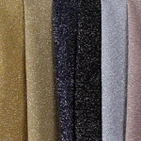
2. Seeing: Observe that the real leather has clear pores and patterns. Yellow cowhide has relatively well-proportioned fine pores, yak skin has thicker and sparse pores, goat skin has scaly pores, and pig skin has large triangular pores. The artificial leather, although it also imitates the pores, is not clear. Let me introduce the characteristics and identification methods of pig leather, horse leather, cow leather and sheep leather: cow leather has fine surface and high strength, which is most suitable for making leather shoes; sheep leather is light, thin and soft, which is an ideal Lurex fabric for leather clothing; pigs Leather has good breathability and water vapor permeability, and is more suitable for making underwear and children's products; horse leather has a tighter fiber structure and higher strength, and it has a better effect on making leather pants and boots. Generally speaking, the thickness, density and distribution of pores on the leather surface are the main basis for distinguishing cow leather, pig leather, horse leather and sheep leather.
Pig leather: The pores on the leather surface are round and thick, extending into the leather obliquely. The pores are arranged in groups of three, and the leather surface presents many small triangle patterns.
Cow leather: Yellow cattle leather and buffalo leather are both called cattle leather, but there are certain differences between the two. The pores on the surface of the scalpel leather are round and extend straight into the leather. The pores are tight and uniform, and arranged irregularly, like a starry sky. The pores on the surface of buffalo leather are larger than that of yellow cattle leather, and the number of pores is less than that of yellow cattle leather. Horse leather: The pores on the surface of the leather are oval, slightly larger than the pores of cattle leather, and are arranged more regularly.
Sheep leather: The pores on the grain surface of the leather are oblate, with clear pores. Several pieces form a group, arranged like fish scales.
3. Smell: All real leather has the smell of leather; and artificial leather has a strong irritating plastic smell.
4. Ignite: tear off a little fiber from the back of real leather and artificial leather. After lighting, all that emits a pungent odor and lumps are artificial leather; all that emits a hair odor without hard lumps is genuine leather.